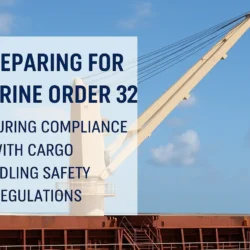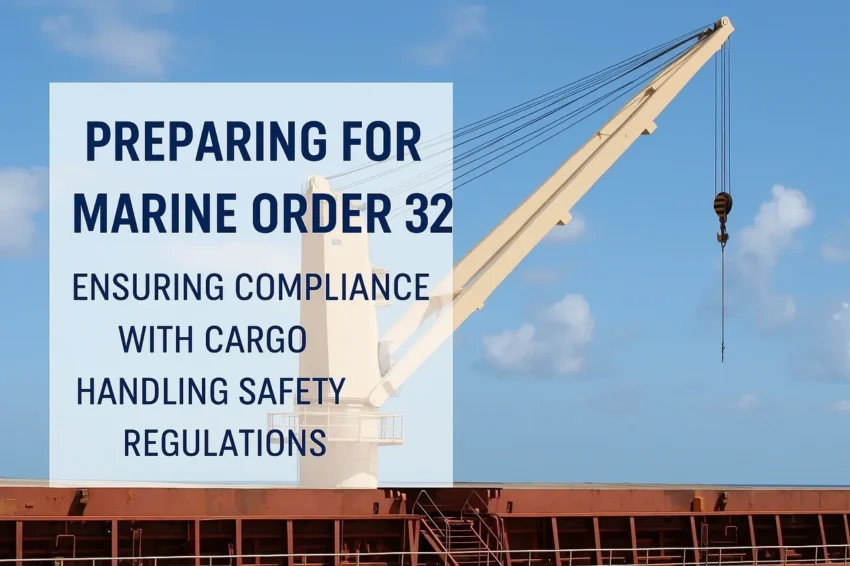
Marine Order 32 (MO32), enforced by the Australian Maritime Safety Authority (AMSA) under the Navigation Act 2012, governs the operation, inspection, maintenance, and testing of cargo handling equipment aboard ships calling at Australian ports. It aims to ensure that vessel cargo gears and access systems meet the safety standards required for efficient and incident-free loading and unloading operations.
Understanding the inspection criteria accepted by inspectors is essential for ship operators, as non-compliance can lead to delays, detentions, or mandatory repairs. Below is a practical guide outlining the key areas of focus to help shipowners and crew prepare for MO32 inspections.
1. Safe Access to Vessel and Cargo Areas
Safety begins with access. Inspectors and stevedores assess the means of entry to and around the vessel. Key requirements include:
- Gangways must be in good condition, correctly rigged, and equipped with safety nets.
- Walkways on deck must be free of obstructions and feature non-slip coatings.
- Poor access arrangements may trigger expanded inspections or reports to AMSA.
2. Documentation for Cargo Gears
Maintaining up-to-date and readily available documents is crucial. This includes:
- Five-yearly load test certificates for cranes and associated gear.
- Annual inspection endorsements by a competent authority (e.g., class society).
- Manufacturer’s certificates for crane wires, hooks, and loose gear.
- Crew-conducted inspection and testing records with photo evidence.
- Training records demonstrating crew competency in safe cargo gear use.
3. Cargo Crane Inspection Points
Cranes play a central role during cargo operations, and their condition directly affects safety and compliance. Inspectors typically check:
- Crane wires: Proper lubrication, absence of corrosion or broken strands.
- Sheaves and wrapping drums: Smooth operation and good condition.
- Safety devices: Cut-outs, limit switches, and emergency stops.
- Operating systems: Functionality of hydraulic or electric systems.
- Cabin condition: Clean, corrosion-free, with clear windows and operational fans.
- SWL markings: Clearly visible on hooks and booms, matching certification.
- Operator safety: Fire extinguisher present, operating lever returns to neutral, escape ladder accessible.
4. Cargo Space Conditions
Since stevedores work inside the cargo holds, these areas are a major focus:
- Access hatches, ladders, and internal platforms must be safe and well-maintained.
- Proper lighting and unobstructed access paths are essential.
- Compliance with enclosed space entry procedures.
- Ventilation fans must be in working condition.
- Hatch covers must open and secure properly.
- Bulk carriers: Check condition of Australian ladders and access systems.
- Container ships: Ensure securing gear (sockets, cleats, bars) is functional.
Conclusion
Preparing for MO32 inspections requires more than a checklist – it calls for a culture of safety, routine maintenance, and proactive documentation. By maintaining access equipment, verifying cargo gear readiness, and staying audit-ready with updated certifications and training logs, shipping companies can navigate MO32 inspections smoothly. Investing time and effort into understanding and complying with MO32 ensures the safety of both ship personnel and stevedores, protects cargo operations, and builds trust with port authorities.
Frequently Asked Questions (FAQs)
Q1: Who conducts the MO32 inspections?
A: While AMSA enforces MO32, the inspections are often carried out by stevedoring companies or port Authorities before cargo operations begin.
Q2: What happens if deficiencies are found?
A: The stevedore may delay or refuse cargo operations and report to AMSA, which may lead to more detailed inspections or detentions.
Q3: Are ship staff expected to demonstrate knowledge of the equipment?
A: Yes. Crew members should be able to reference the Safety Management System (SMS), show training records, and discuss procedures confidently.
Q4: How often should cranes and cargo gear be tested?
A: Load testing is required every five years, with annual inspections endorsed by a competent authority. Routine checks should be performed by crew.
Q5: Can digital records be used during inspection?
A: Yes. Digital photos, scanned certificates, and electronic logs are acceptable if they are accessible and verifiable.
Call to Action
Ensure your vessel is always MO32 inspection ready. At Optimum Marine Consulting, we offer tailored compliance support, training programs, and documentation audits to help your team master MO32 requirements.
✅ Need a pre-inspection audit or compliance review? Contact us today.
📞Schedule a consultation or learn more at Optimum Marine Consulting.