Crew welfare has become one of the top priorities during Port State Control inspections, and non-compliance with the Maritime Labour Convention (MLC 2006) remains a major cause of vessel detention.
In Australia, MLC standards are strictly enforced by AMSA through the Navigation Act 2012 and Marine Order 11. While larger vessels above 500 GT are generally familiar with these requirements, smaller vessels and certain foreign-flagged ships often face complex compliance challenges.
At Optimum Marine Consulting, we specialize in bridging the compliance gap for vessels that fall into these “tricky” categories.
Failure to comply with MLC requirements can result in:
➢ Vessel detention during Port State Control inspections
➢ Delays to operations and charter schedules
➢ Increased scrutiny from AMSA and Flag Administrations
➢ Financial penalties and reputational damage
➢ Crew welfare complaints and legal disputes
Our goal is to ensure your vessel remains compliant, operational, and inspection-ready at all times.
The requirement to demonstrate compliance often extends beyond simply possessing a certificate.
For Regulated Australian Vessels (RAVs) between 200 GT and 500 GT, a formal MLC Certificate may not be mandatory- however, demonstrating MLC 2006 compliance still is.
Similarly, several Flag Administrations, including the Maritime Cook Islands, impose strict crew welfare and employment requirements even for smaller vessels.
Under the MLC framework, foreign-flagged vessels visiting Australian waters may still be inspected against MLC standards even when:
➢ The Flag State is not an MLC signatory
➢The vessel is under 500 GT
➢Formal certification is not required by the Flag Administration
This “No More Favourable Treatment” clause means vessels operating in Australia must still meet internationally accepted crew welfare standards.
We frequently identify challenges such as:
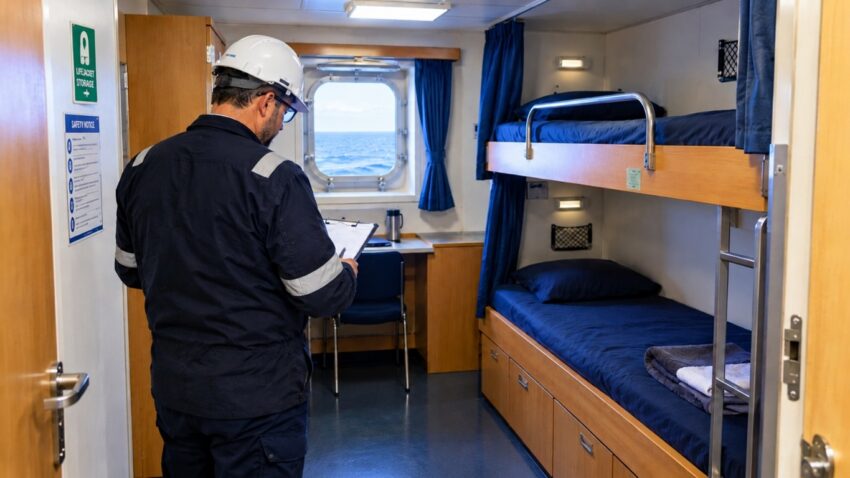
➢ Non-compliant crew accommodation layouts
➢ Galley and food preparation deficiencies
➢Incomplete or outdated Seafarer Employment Agreements (SEA)
➢Missing mandatory clauses required under MLC 2006
➢Lack of documented onboard welfare procedures
We help you align both the physical ship and the legal contracts to meet modern standards
We provide a complete compliance review tailored to your vessel type, flag, and operational area.
Our Services Include
➢ Strong understanding of AMSA and Australian Port State Control expectations
➢ Practical, vessel-focused compliance solutions
➢ Experience across small vessels, offshore support vessels & foreign-flagged ships

Optimum Marine Team played a key role in building our SMS, implementing marine software for ship management, trained our team and guided us through completing the interim DOC audit with an IACS class society.

Optimum Marine Team managed the registration of my tugboat with AMSA. Reactivated the tug from dead ship to fully operational state, managed the five-yearly dry docking schedule and issuance of certificate of survey.

Working with Optimum Marine Consulting to certify Taiga’s electric PWC for the Australian market was a smooth and professional experience. Their clear communication, expertise, and thoroughness made the process seamless. Taiga looks forward to working with OMC again and highly recommends them as a certification partner.

Optimum Marine Consulting has helped through required changes and audits to attain our ISO 9001 certification. Our consultant has a wealth of knowledge, speaks in layman’s terms and essentially held our hand through it all. We’ve had a great experience and are very appreciative of his support. Can recommend!
Yes. Even where formal certification is not mandatory, vessels may still need to demonstrate compliance during Port State Control inspections, especially in Australian waters.
It allows authorities to inspect foreign-flagged vessels to MLC standards even if the ships Flag state has not ratified the MLC convention.
The Declaration of Maritime Labour Compliance (DMLC) Part II outlines the onboard systems, procedures, and policies a vessel uses to maintain ongoing compliance with MLC requirements.