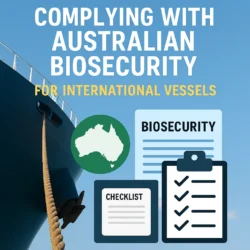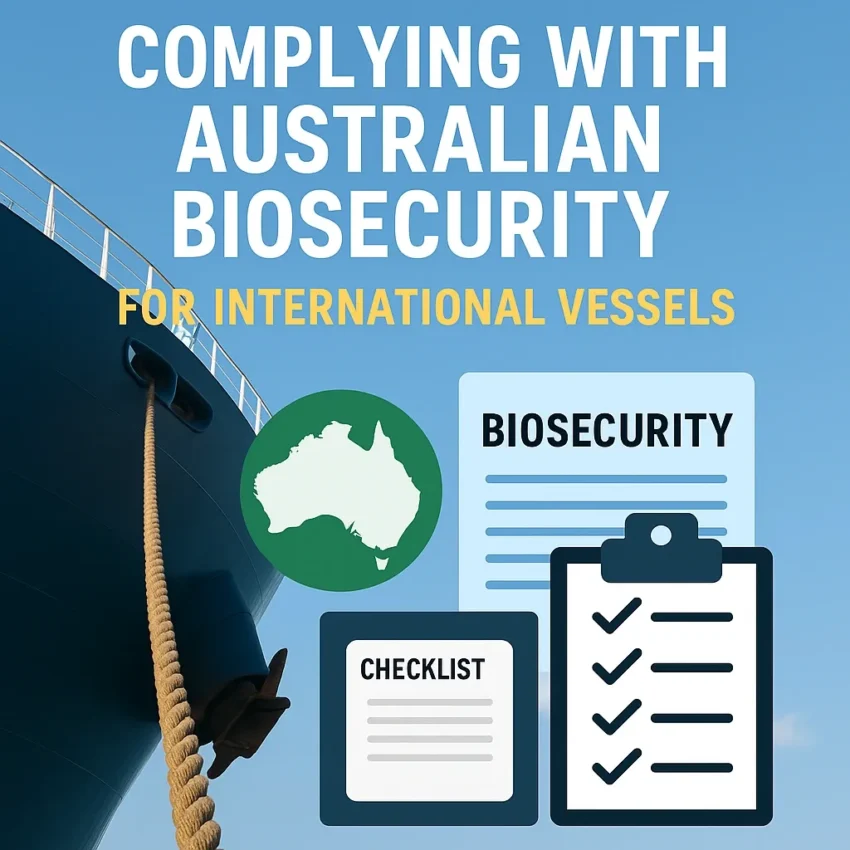
Every commercial and non-commercial vessel entering Australian ports is subject to strict biosecurity compliance requirements enforced by the Department of Agriculture, Fisheries and Forestry (DAFF), under the Australian Government. These regulations are designed to minimize biosecurity risks and ensure vessels meet International Health Regulations (IHR) throughout their stay in Australian waters.
Understanding and adhering to these rules is crucial to avoid delays, demerit points, or even denial of entry.
Why Biosecurity Matters
Biosecurity risks are assessed and managed through pre-arrival reporting, risk assessments, and physical inspections by biosecurity officers. While vessels are in Australian territory, they are required to report the following:
- Crew health and changes
- Presence of animals or pets
- Observations of pests or hitchhiking animals
- Conditions related to ballast water and biofouling
- Any unusual biological hazards onboard
Pre-Arrival Requirements and Reporting Systems
Several pre-arrival protocols ensure vessels are compliant before they even reach port:
- Vessel Operator & Agent Responsibilities: Timely reporting before arrival, during port stay, and while in Australian waters.
- Commercial Vessels: Use the MARS (Maritime and Aircraft Reporting System) platform.
- Non-Commercial Vessels (e.g., yachts): Must use the PAR (Pre-Arrival Reporting) system.
- First Point of Entry (FPOE): Understand if the port is an approved FPOE and the associated obligations.
- Vessel Compliance Scheme (VCS): Frequent callers to Australian ports may benefit from reduced inspection frequency.
- Biosecurity Control Release: Vessels operating long-term in Australian waters may be considered low-risk & may be exempted from the regular inspections.
Onboard Biosecurity Inspection – Key Focus Areas
Once a vessel arrives at an Australian FPOE seaport, a biosecurity officer will conduct a thorough inspection. Some of the major checkpoints include:
1. Health & Sanitation
- Evidence of medical attention for ill crew members
- Removal of any migratory birds prior to arrival
- No pest infestations or visible insect activity
2. Garbage & Galley Hygiene
- Waste must be sealed in lidded containers
- Galley areas must be clean, pest-free, and have food in closed storage
- Refrigerated stores should be well-organized with no spoiled food
3. Accommodation and Deck
- No loose grains or food debris in accommodation or deck areas
- Regular inspections to ensure cleanliness
4. Biofouling Management
- Approved Biofouling Management Plan
- Evidence of anti-fouling paint and its service life
- Underwater inspection and cleaning may be required if no plan exists
5. Ballast Water Compliance
- Approved Ballast Water Management Plan
- Accurate and complete Ballast Water Record Book
- Proper operation of the Ballast Water Treatment System (BWTS)
Conclusion
Australian biosecurity compliance is not just a regulatory obligation—it is essential to protect the country’s delicate ecosystems and agricultural industries. For vessel operators, thorough preparation, accurate documentation, and awareness of current regulations are key to a smooth and successful port stay.
Understanding what authorities expect, conducting internal checks, and maintaining transparent records can significantly reduce inspection delays and potential penalties.
FAQs
Q1: What happens if a vessel fails a biosecurity inspection?
A: The vessel may be denied clearance, incur fines, or receive demerit points affecting future inspections.
Q2: What is the Vessel Compliance Scheme (VCS)?
A: A DAFF initiative that reduces inspection frequency for compliant vessels making frequent voyages to Australia.
Q3: Can I use the same ballast water records from a previous port?
A: Yes, however they are correctly filled and align with onboard BWTS logs; inconsistencies can trigger deeper inspections.
Q4: Are yachts and recreational vessels subject to the same rules?
A: Yes, but they must report using the PAR system instead of MARS.
Call to Action
Are you fully prepared for your vessel’s next visit to Australia?
At Optimum Marine Consulting, we help shipping companies and yacht operators navigate the complexities of Australian biosecurity regulations. From documentation reviews to mock inspections – we ensure you’re audit-ready, every time.
Contact us today for compliance assistance or a pre-arrival checklist customized to your vessel.