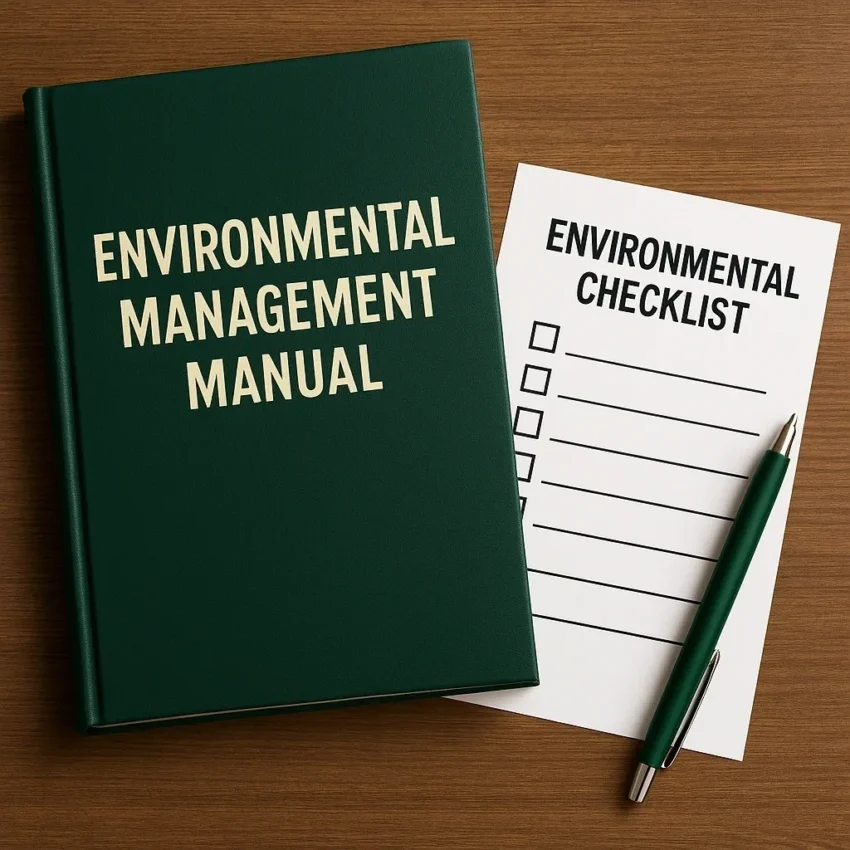
One of the key objectives of the ISM Code-alongside ensuring safe ship operations-is the prevention of pollution. As such, an Environmental Management Manual (EMS) forms a vital part of a company’s Safety Management System (SMS).
While environmental management policies and plans can be integrated within the broader SMS, it is highly recommended to develop a dedicated EMS as a standalone manual. This approach not only provides better clarity and direction for Environmental Compliance Officers but also strengthens the company’s alignment with ISO 14001 environmental management standards.
In this article, we’ll outline practical guidance for setting up a robust EMS within your SMS framework.
Key Components of the EMS Manual
A well-structured EMS should include the following elements:
- Scope of the EMS, including definitions and terminology.
- Environmental Policy of the company.
- Environmental Objectives, outlining measurable goals.
- Applicable Legislation, including MARPOL, IBC Code, and other international conventions.
- Environmental Management Structure, identifying:
- A shore-based Environmental Management Officer (reporting to the DPA).
- A designated onboard Environmental Officer.
Additionally, the manual must define roles and responsibilities of both shipboard and shore personnel in managing environmental aspects.
Environmental Evaluation & Planning
A critical section of the EMS involves evaluating potential pollution sources and establishing control measures. The following sources should be assessed:
- Oil, chemicals, and liquefied gases in bulk
- Packaged dangerous goods
- Sewage and grey water
- Garbage
- Engine emissions (SOx, NOx, CO₂, particulates)
- Ballast water
- Antifouling coatings
- Cargo vapor emissions
- Halons and CFCs
- Noise pollution
Key Plans & Documents Required:
- SOPEP/SMPEP
- Crude Oil Washing (COW) Procedures
- SEEMP (Parts I, II, III)
- Garbage Management Plan & Record Book
- Ballast Water Management Plan
- Biofouling Management Plan
- AFS Certificate and related documents
- Oil Record Books (Part I & II)
- Chemical Handling Procedures
- Air Emission Control Documents (EIAPP, NOx Technical File, Scrubber documentation)
- Sewage Management Plan
- Vapor Emission Control Procedures
- CFC & Halon Handling Procedures
- Noise Control Policies
- Green Procurement Policies
Environmental Critical Equipment & Spare Parts
Identify Environmentally Critical Equipment and ensure proper procedures for maintenance and testing. Examples include:
- Oily Water Separator (OWS)
- Oil Discharge Monitoring Systems (ODME)
- Sewage Treatment Plants (STP)
- Sludge Incinerators
- Garbage Compactors
- Ballast Water Treatment Systems
- Scrubber Systems
- Selective Catalytic Reduction (SCR) Systems
- Biofouling Control Systems (Impressed Current/Cathodic Protection)
Just as for safety-critical equipment, critical spare parts must be maintained and documented.
Training, Reporting, and Continuous Improvement
To ensure effective implementation and compliance, the EMS should include:
- Environmental Training & Drills: Regular programs for both ship and shore personnel.
- Awareness of Legal Consequences: Highlight criminal and civil liabilities for environmental violations.
- Resource Allocation: Ensure manpower, materials, and financial support for EMS implementation.
- Non-Compliance Reporting:
- Internal reporting systems for all personnel.
- External reporting protocols (Flag State, Port State, Class, P&I, etc.).
- Company Contingency Plan: To handle any environmental emergency involving managed vessels.
- Activity Records: Document all environmentally relevant actions and procedures.
Monitoring, Evaluation & Management Review
Establish the following systems for continuous improvement:
- Annual Environmental Targets: Measurable goals across the fleet and offices.
- Internal and External EMS Audits
- Environmental Performance Monitoring
- Root Cause Analysis: For every non-compliance, with corrective and preventive actions.
- Annual EMS Review: By company management and ship’s Master.
Conclusion
Implementing a comprehensive Environmental Management Manual (EMS) is not just a regulatory requirement—it is a commitment to sustainability, operational excellence, and corporate responsibility. By identifying potential pollution sources, setting clear policies, assigning responsibilities, and continuously monitoring performance, shipping companies can significantly reduce their environmental footprint. A well-structured EMS, aligned with the ISM Code and in pursuit of ISO 14001 standards, not only safeguards marine ecosystems but also enhances the company’s reputation and compliance posture. Prioritizing environmental stewardship today is an investment in the future of maritime operations and our planet.
Frequently Asked Questions (FAQ)
1. Is an Environmental Management Manual (EMS) mandatory under the ISM Code?
While the ISM Code requires procedures for environmental protection, a standalone EMS manual is not mandatory. However, it is highly recommended as a best practice to demonstrate structured environmental compliance and support alignment with ISO 14001.
2. Can the EMS be integrated into the company’s existing Safety Management System (SMS)?
Yes. The EMS can either be a dedicated manual or integrated into the broader SMS. A standalone EMS provides clearer structure, easier auditing, and stronger focus on environmental performance.
3. What is the difference between ISM Code compliance and ISO 14001 certification?
ISM Code compliance is mandatory for most commercial vessels and focuses on safety and pollution prevention. ISO 14001 is a voluntary international standard focused on broader environmental management. Implementing an EMS helps bridge the gap between the two.
4. Who should be responsible for managing the EMS onboard and ashore?
Typically, an onboard Environmental Officer and a shore-based Environmental Management Officer (reporting to the DPA) share responsibilities, ensuring consistent application across operations.
5. What kind of training is required for EMS implementation?
Training should cover company environmental policies, handling of pollutants, emergency procedures, legal consequences of non-compliance, and the use of environmental control equipment. Drills and regular refreshers are essential.
Call to Action
Ready to Elevate Your Environmental Compliance?
Optimum Marine Consulting can help you develop a fully ISM-compliant Environmental Management Manual tailored to your fleet operations. From documentation to training and audits, we support your commitment to sustainable shipping.
Contact us today to schedule a free consultation and take the first step toward cleaner seas and stronger compliance.