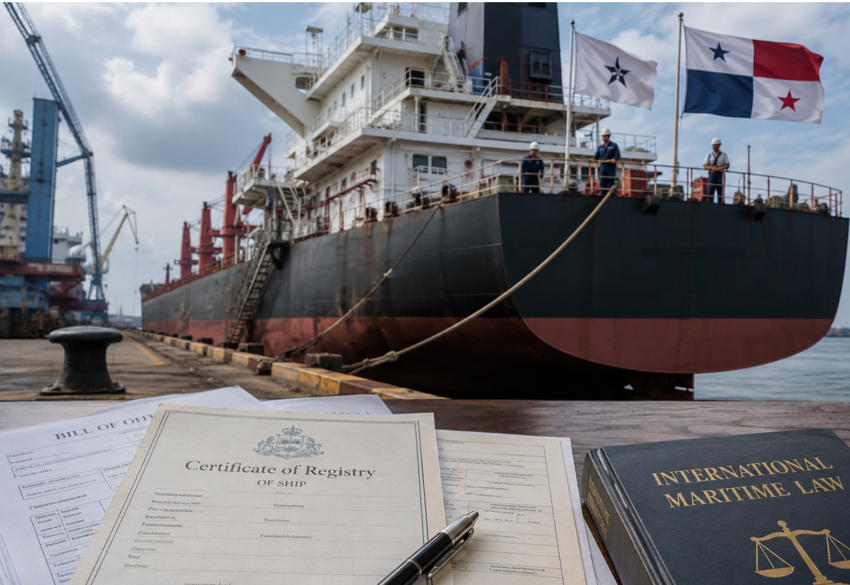
Changing the flag of a vessel – also known as reflagging – is a significant operational decision for shipowners. This process involves registering the ship under a new flag state and can be triggered by a variety of factors, including:
- Strategic alignment with a preferred flag administration.
- Fleet-wide standardization.
- Operational or regulatory requirements.
- Cost optimization.
- Conditions set by financiers or insurers.
To ensure a smooth and compliant transition, it’s crucial to understand the detailed steps and considerations involved in the flag change process.
Key Considerations Before Changing Flag
1. Role of Classification Societies
If the vessel is classed and its statutory surveys are carried out by an IACS-recognized classification society, the transition process becomes relatively smoother. These societies are often authorized to perform most statutory surveys and audits, and issue necessary certificates on behalf of many flag administrations.
However, not all flag states authorize classification societies to perform all functions. For instance, one flag may permit ISM audits via class, while another may insist on conducting them independently.
2. Non-Classed Vessels
For vessels not currently under a classification society, the new flag administration will outline the necessary surveys and documentation. These could include:
- Full renewal surveys (even if previously completed).
- Drydocking and tail shaft inspections.
- MLC inspections and other statutory surveys.
Step-by-Step Process for Changing Flag
1. Application & Carving Note Issuance
Submit an application to the new flag administration and obtain a carving note. The ship’s name, port of registry, and official number must be physically marked on the vessel as specified.
2. Interim Documentation
Once the carving note is verified, following interim documents will be issued by the Flag Administration.
- Full renewal surveys (even if previously completed).
- Drydocking and tail shaft inspections.
- MLC inspections and other statutory surveys.
3. DOC (Document of Compliance)
The ship management company must obtain a DOC issued by or on behalf of the new flag administration to manage the vessel legally.
4. Approval of Key Plans & Manuals
Essential documents like:
- SOPEP
- Ballast Water Management Plan
- NOx Technical File
- Stability Booklets
must be reviewed and approved by the new flag administration or its authorized representative.
5. Surveys & Inspections
Full or partial statutory surveys as required by the new flag must be completed onboard.
6. Reprogramming Shipboard Equipment
Update shipboard radio and tracking equipment such as:
- AIS
- EPIRB
- SSAS
- VDR to reflect new ship details and conduct necessary flag-based tests.
7. LSA/FFA Compliance Check
Review annual and five-year inspection records of safety equipment (lifeboats, life rafts, extinguishers). Some flags may require reinspection by their authorized service providers.
8. Update Equipment Markings
Modify markings on all LSA equipment to reflect the new flag.
9. Issuance of Interim Certificates
Following successful inspection:
- Short-term certificates for statutory compliance.
- Interim SMC, ISSC, and MLC certificates.
10. Final Certification
Upon fulfillment of all conditions, full-term certificates are issued
Conclusion
Changing the flag of a ship is not a mere formality – it is a detailed regulatory process that demands strategic planning, technical accuracy, and timely execution. Understanding the interplay between flag administrations, classification societies, and regulatory bodies is key to a successful transition. With the right preparation, the change of flag process can enhance regulatory alignment, financial flexibility, and operational efficiency for shipowners.